Rental Ledgers and Receipts: What to Include, How They Work, and Why They Matter
Stay compliant and avoid disputes with clear rental ledgers and receipts.


Stay compliant and avoid disputes with clear rental ledgers and receipts.
Keeping accurate rent records is one of the simplest ways to protect your investment and maintain a professional relationship with your tenant. Rental ledgers and receipts show exactly what has been paid, when it was paid, and what the payment covered. When these documents are complete and easily accessible, disputes become easier to resolve and you stay compliant with your state’s requirements.
A rental ledger is a running record of every rent payment made during a tenancy. It shows the full payment history from the day the lease starts to the day the tenant moves out. It is often the first document requested by tribunals, insurance providers, and property managers because it tells the entire story of rent paid, missed, or overdue.
Generally, a complete rental ledger should include:
This creates a transparent, chronological record that both you and your tenant can refer to at any point in the tenancy.
A rent receipt is a document you provide to your tenant for rental payments. Some tenants request receipts for personal records. Others need them for work, tax, or government support applications. In many states, providing a rent receipt is a legal requirement when payments are made in cash or when a tenant specifically asks for one.
Generally, a rent receipt should clearly show:
A receipt should also confirm whether the tenant is up to date, in credit, or in arrears.
The ledger acts as a shared reference point. When rent comes in, you record it. If a payment is missed or late, the ledger gives you the exact number of days in arrears. When tenants request proof of rent, the ledger provides it instantly. When disputes arise, the ledger serves as evidence that cannot be disputed because the numbers speak for themselves.
Each Australian state and territory has similar expectations for clear rent records, but the exact requirements differ slightly.
In NSW, landlords and agents must maintain a proper record of every rent payment made during a tenancy. The format is flexible, but the ledger must clearly show:
Tenants can request a copy of this ledger at any time. Once the request is made in writing, the landlord or agent must supply the ledger within seven days. If the tenant has already received a ledger for the same dates in the past, the landlord or agent is not required to provide it again.
In Victoria, rental providers and their agents must follow specific requirements when accepting rent. If a renter pays in person, a receipt needs to be issued straight away. For any other payment, the renter can ask for a receipt, and it must be provided within five business days.
Rental providers must also keep a record of all rent paid during the tenancy and store those records for a minimum of twelve months.
Failing to meet any of these requirements can result in penalties for the rental provider.
In Queensland, tenants must receive a written rent receipt whenever they pay in cash. The same applies if the tenant pays by cheque and asks for a receipt. Not issuing a receipt in these situations is an offence. A rent receipt in Queensland must show who the payment was made to, the amount paid, and the exact rental period it covers. Tenants are encouraged to keep their receipts as proof of payment.
Property managers and owners must also maintain a complete and accurate rent ledger for every tenancy. These records must be kept for at least one year after the tenancy ends. If a tenant requests a copy of their rent record, it must be provided within seven days.
In Western Australia, tenants must receive a rent receipt unless the payment was made electronically. This includes EFT transfers, automated payments, or any other online payment method.
For all other payment types, the landlord has three days to issue a receipt. That receipt needs to clearly set out:
Tenants are encouraged to hold onto their receipts in case there is ever a disagreement about rent paid. Landlords are also required to keep an accurate record of all rent received throughout the tenancy.
In South Australia, anyone who collects rent under a residential tenancy agreement must issue a receipt within 48 hours of receiving the payment. The only exception is when rent is paid directly into the landlord's or agent’s nominated bank account and they already keep a written record with all required details.
Tenants can also request a written statement showing all rent received over a specific period. Once the tenant puts this request in writing, the landlord or agent has seven days to provide the statement. Landlords and agents are to keep proper rent records. The rent record must include the same information as on a rent receipt. If the tenant is in arrears on the day a payment is made, the rent record must clearly state the outstanding amount.
In Tasmania, tenants must receive a rent receipt whenever they pay by cash or cheque. The receipt needs to set out the payment date, the tenant’s name, the rental property address, the amount paid, and the rental period covered. Electronic payments do not require a receipt because they already produce a digital record. Landlords are not allowed to change how rent is paid during the fixed-term lease unless the tenant agrees to the change.
Tasmania also has strict rules around fees. Only banks, credit unions and other authorised deposit-taking institutions can charge tenants a fee for paying rent. Any third-party service used by a landlord to collect rent must not pass on fees to the tenant.
In the ACT, landlords must provide a rent receipt whenever a tenant makes a payment, unless the rent is deposited straight into a nominated bank account. Electronic deposits count as their own record, so a separate receipt is not required. Landlords must also maintain proper rent records throughout the tenancy and keep those records for at least twelve months after the agreement ends.
In NT, the rules for receipts depend on how the tenant pays:
Landlords must also keep a written record of every rent instalment they receive. These records can be maintained electronically, and tenants have the right to ask to see them at any time.
Not having complete records creates avoidable issues, including:
Accurate rental ledgers and receipts may feel like small admin tasks, but they play a big role in keeping your tenancy running smoothly. Clear records prevent misunderstandings, support you during disputes or insurance claims, and give tenants confidence that everything is handled professionally.
If you self-manage, staying on top of these requirements across different states can get time-consuming. Manual ledgers increase the chance of missing entries or losing paperwork, and delays in issuing receipts can create unnecessary friction. Using a simple, consistent system makes the entire process easier for both you and your tenant.
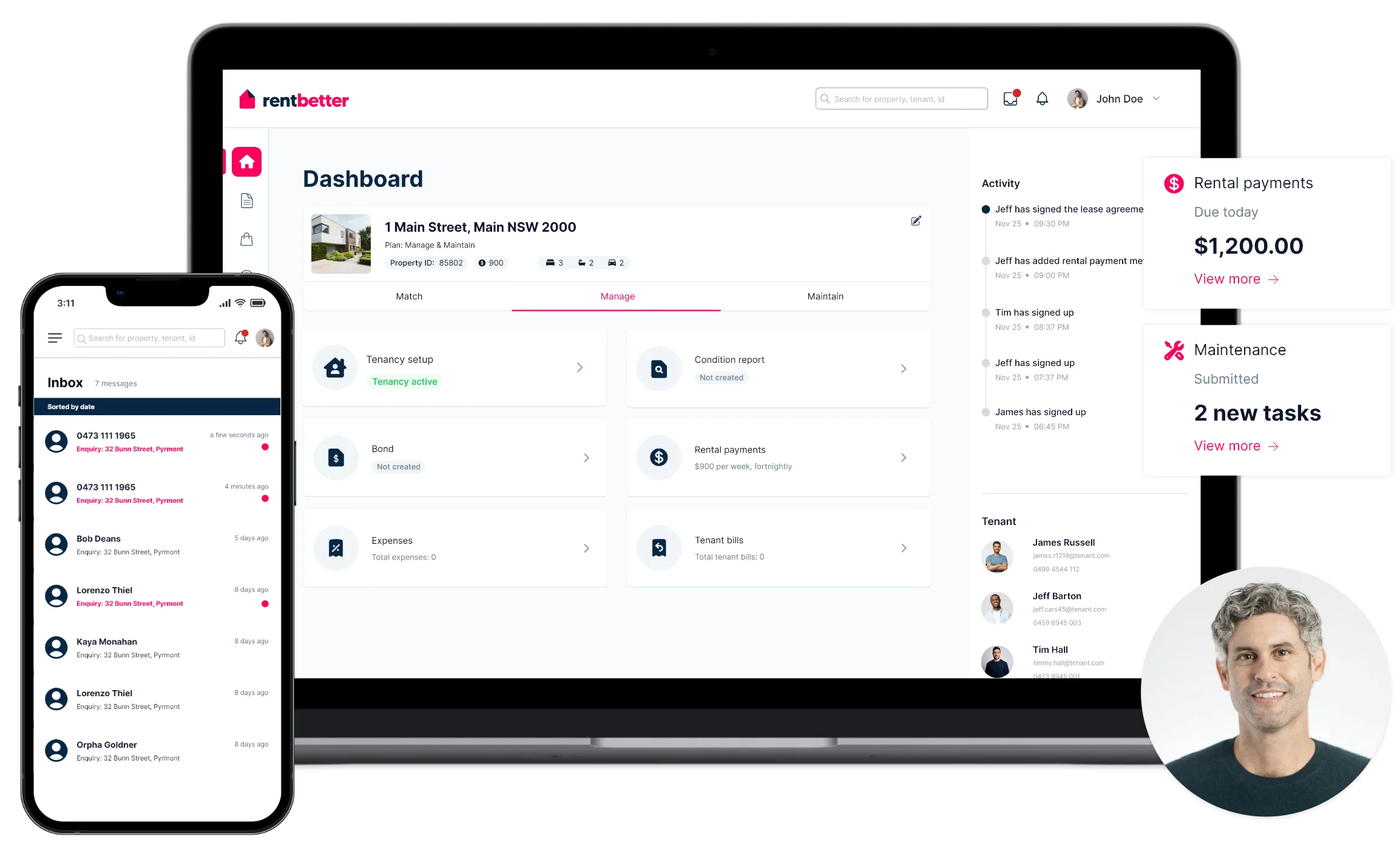
RentBetter takes the pressure off by automating rent tracking and record keeping. You can view everything in one place, generate complete rental ledgers instantly, download receipts with a click and keep all documents stored securely online. Every rent payment is logged automatically, so your records stay accurate and ready whenever you need them. If you want to stay compliant, organised and confident with how you manage rent, RentBetter makes it effortless.
Learn how the RentBetter platform can help you self-manage your rental property. Register below to watch the demo video.